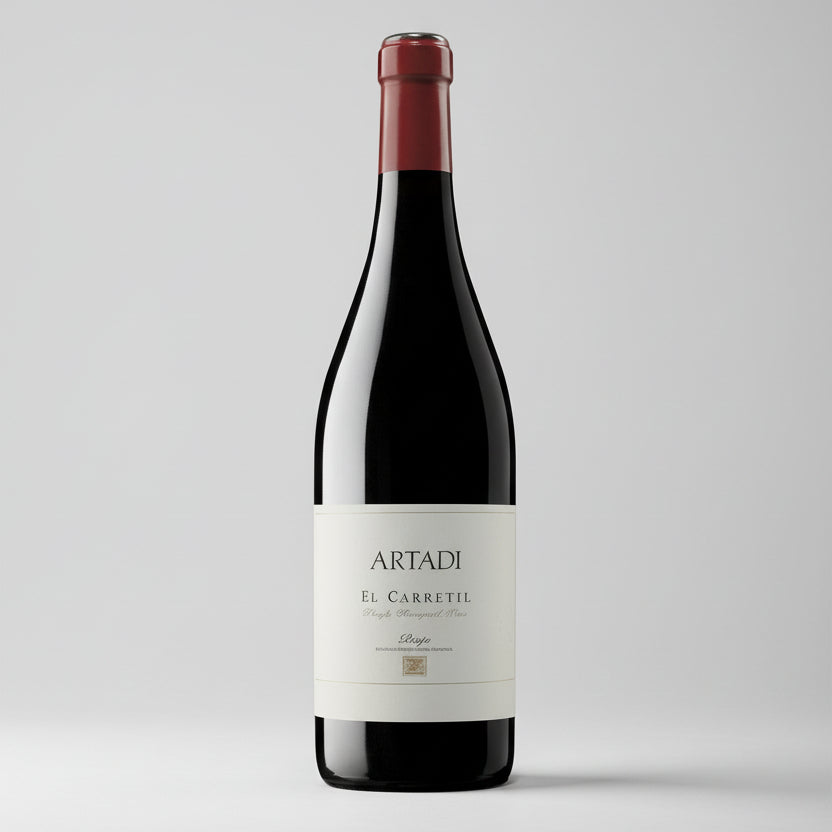

Artadi 'El Carretil' 2019
Artadi 'El Carretil' 2019
Couldn't load pickup availability
ID:
• Origin: Laguardia, Rioja Alavesa, Spain
• Appellation: Vino de España
• Grape variety: 100% Tempranillo
• Alcohol percentage: 14%
• Style: Mineral and tight, deep fruit, spicy.
• Storage potential: Now until 2040.
• Rating: 96+/100 Wine Advocate.
El Carretil 2019 is a distinctive terroir wine, built on tension, finesse, and a rocky undertone. The fruit is precise and compact: black cherry, blueberry, and plum, with mint, bay leaf, and cocoa-like nuances. The wine feels both energetic and serene, with a cool, stony backbone that gives it an almost "vertical" style.
On the palate, it is tight and layered: ripe fruit without excess, a fine spiciness, and tannins that feel like chalk powder—rich, but never heavy. The finish is long and dry-mineral, with a clear sense of origin.
Ideal with roasted lamb, wild fowl, grilled beef, mushrooms, or dishes with smoked paprika and herbs.
Vinification.
The Tempranillo comes from the El Carretil vineyard (multiple plantings, calcareous soils with sandstone and silt). Fermentation takes place in open oak vats, followed by malolactic fermentation in barrel. After that, the wine matures for 9 months in oak barrels. The wine was bottled in June 2021 and then further develops in the bottle until release and beyond.
The domain.
Artadi, located in Laguardia (Rioja Alavesa), evolved from a local cooperative tradition into one of the leading names in terroir-driven Spanish wine. Under the leadership of Juan Carlos López de Lacalle, the focus decisively shifted to origin: separate villages, specific soils, and eventually individual vineyards as the starting point for style and quality. This vision also led Artadi to consciously work outside the classic origin frameworks to be able to communicate the identity of the vineyards more freely.
In the vineyards, sustainable, natural agriculture is central: many plots are maintained without chemical fertilizers or pesticides, and biodiversity and living soils are striven for. In the cellar, this philosophy aligns with a precise, non-intrusive approach: extraction and wood use are adapted to the vintage and the terroir, with the aim of preserving finesse, tension, and transparency.